 Naxos Boat Tours
Rina's Cave: Naxos's Sea Cave, and Every Boat That Swims It
Rina Cave, Naxos's signature sea cave, ends up in every boat photograph on the island: a limestone cavern whose mouth swallows a boat's worth of swimmers, water inside lit from above like a lamp. It sits on the coast of little Iraklia, an island most visitors never set foot on, reachable only by water. This guide covers the cave itself, the swim, the boats that call, and the wind rules that decide whether it opens - with every ticket priced in day trips by boat from Naxos.
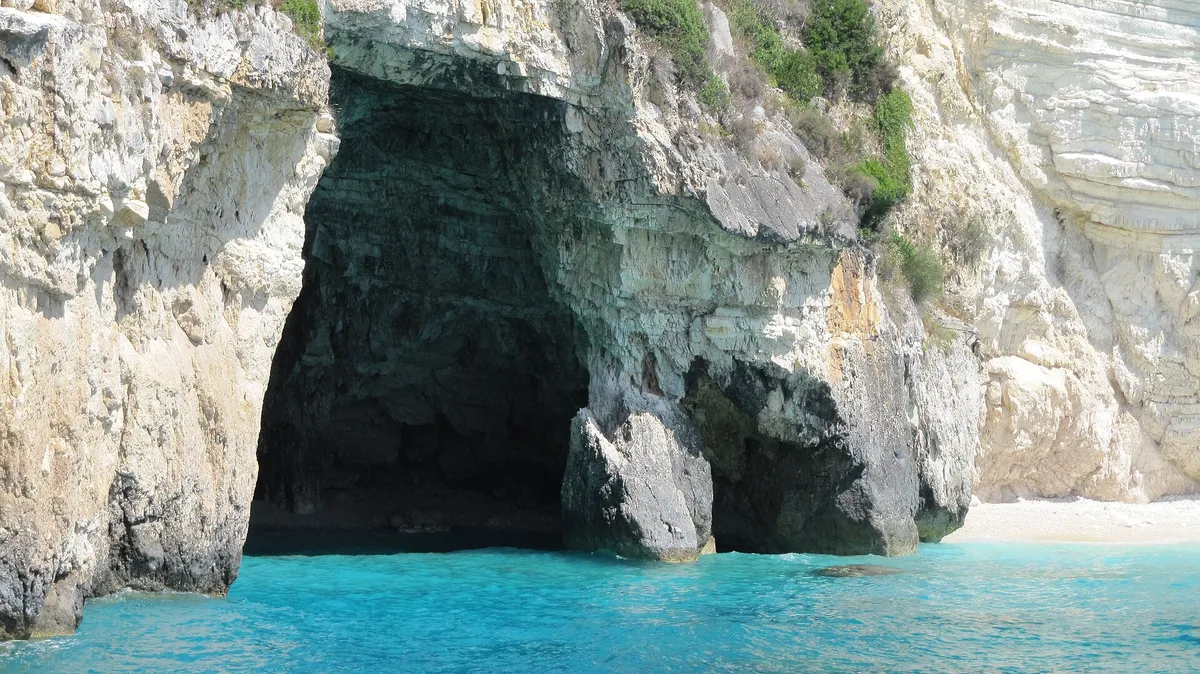
A Greek sea cave at swim level - this one on Paxos, an Ionian cousin of Rina's. Free-swimming caverns of this genre are what the Naxos boats run south to find. Photo: Wikimedia Commons (CC BY-SA), attribution in caption.
Quick answer Where the cave is, what the swim is actually like, and the two-hour ticket that reaches it cheapest
Rina's Cave sits on the southern coast of Iraklia, the westernmost of the Small Cyclades - open only to the sea, with no road, no quay and no facilities, which is precisely why boats guard the franchise. The swim is a float: boats edge toward the mouth, swimmers drop off the ladder into deep, glass-clear water and drift inside a chamber open to the sky. You reach it on the two-hour Panermos trip from $33 (the cave is minutes from that pier), on the full-day Koufonisia cruises from $104, or on the Schinoussa-Iraklia sailing day - all checked September 2026. The one variable nobody controls: wind. A running meltemi swell closes the inside swim, and the crew substitutes a calmer cove.
Key takeaways
- Cheapest way in: the 2-hour Panermos boat, from $33 - 5.0★ across 110 reviews.
- Best combined with islands: the Koufonisia + Rina full day - the cave is the return leg's finale.
- Cave closed? It is wind, not will: book morning slots and keep the 24-hour cancellation as your re-run ticket.
Where the Cave Sits and How Boats Reach It
Rina's Cave punctures the limestone of Iraklia's south-western coast, facing the open strait that separates the Small Cyclades from Naxos. The geography matters for bookers:
It is Iraklia's, not Naxos's. The cave markets itself under Naxos's name because the boats leave from Naxos - but the rock belongs to Iraklia, an island of a few hundred permanent residents, two villages and a fame-to-area ratio among the highest in the Cyclades. Its capital, Agios Georgios, sits in the bay on the island's north side; the cave is a short boat-run down the coast.
Sea-only access. The cave is reached only by sea - no road, no quay; no path reaches it, and the cliffs give nothing to a swimmer from shore - the boat is not the convenient way in, it is the only way in.
The approach. Boats round the coast from either Naxos's south (the Panermos run, minutes away) or the west (the day-cruise line, after the islands). Captains nose toward the mouth, judge the swell, and either slide inside or hold at the mouth line and let swimmers cross under their own power with a guide.
The name. Locals write it Rina or Rinia or Rinia's cave; sailors' charts call the cove below it something else again. Boat crews say "the cave" and everyone knows.
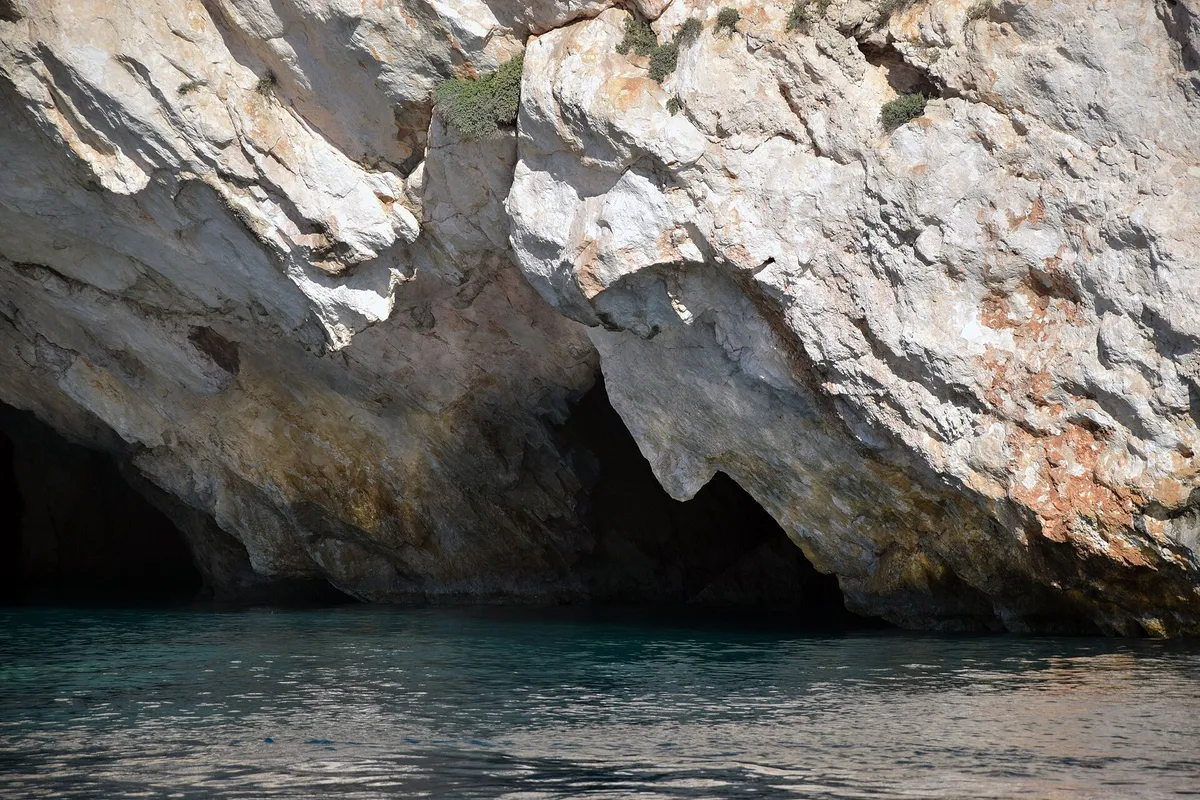
Inside a Greek sea cave: smooth rock, still green water, light from the mouth (Zakynthos). Rina's interior rewards the same wide-eyed float. Photo: Wikimedia Commons (CC BY-SA).
Inside the Water: What the Swim Is Like
The honest description, assembled from the listings' crews and the reviews of people who did it:
The entry is deep water. You leave the boat by ladder or seated-shuffle into water too deep to stand in - swimmers only in practice, though the Panermos trip carries swimming aids that let confident floaters join the mouth line.
The chamber opens above you: a hall of rock with the sky through its throat. Reviews use the word "cathedral" more than any other, and the acoustics back them - voices come back off the stone with a building's reverb.
The light is the reason cameras come out: mouth-glow blues grading into interior dark, and on the right hour a shaft of sun down the chimney. The Panermos crew photographs the day as a service; on the bigger boats you are the photographer.
The temperature drops a few degrees at the mouth-line - the cave breathes cool air - which in August is the day's best luxury and in May a sharp surprise.
The duration is short: 20-45 minutes of water time depending on the boat's schedule. It is a taste, not a session; the trips that want you swimming longer add the calm-bay stop, which is where the wine tends to appear.
The Boats That Stop Here, Compared
The boat tours from Naxos that include the cave call are these, and they reach it with different math:
| Boat | From-price (Sept 2026) | Day shape | The cave's role |
|---|---|---|---|
| Panermos traditional boat | $33 | 2 hours | The destination itself - plus a calm-bay stop |
| Koufonisia + Rina cruise | $104 | 9.5 hours | Finale swim after two islands |
| Schinoussa-Iraklia sail | $74 | 9 hours | Coastal call en route to the islands |
The WWII Wreck Next Door at Alimia
The cave's neighbour attraction sits across the strait: in Alimia bay, on the islet between Iraklia and Rhodes's shipping lane, lies the wreck of a WWII Arado AR 196 - a German reconnaissance floatplane that came down in the war and never left. The Schinoussa-Iraklia sailing day stops above it, and the listing's own line - "worth every cent" - has become the trip's slogan.
The pairing is natural and worth planning around: a day that holds both a sunken aircraft and a swum cavern is doing more Cycladic variety than most weeks manage. The practical difference: the wreck is open-water snorkelling over eight-to-ten metres of depth - surface floaters see the silhouette, free-divers get the wings - while the cave is an in-the-rock experience. Confident swimmers should do both once; the listing that rules out non-swimmers applies to the wreck stop, not the cave's guided mouth line.
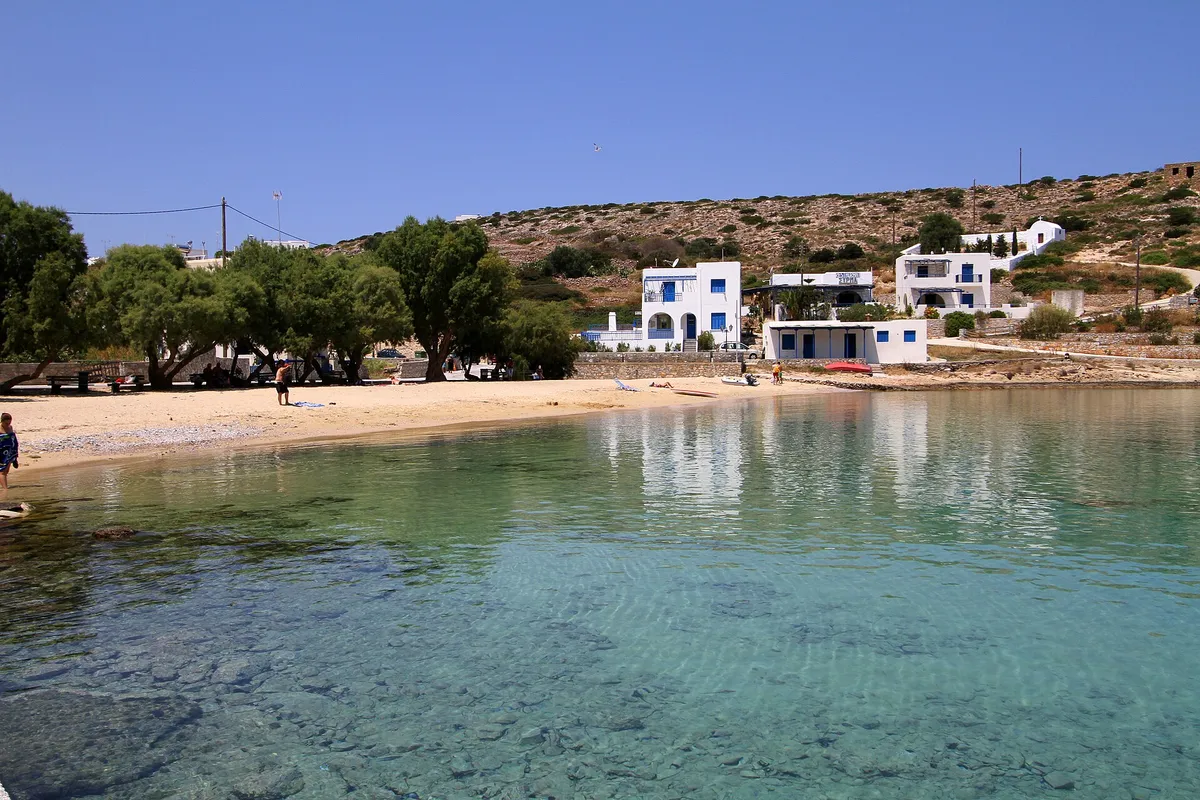
Agios Georgios, Iraklia - the port village of the island that owns the cave. Day boats moor here for the village hour; the cave lies minutes down the coast. Photo: Wikimedia Commons (CC BY-SA).
Myth, Pirates and the Cave's Name
The Cyclades explain their caves twice - once by geology, once by story - and Rina's carries both versions. The geology is the honest one: Aegean limestone, dissolved along a fault line by uncounted millennia of the same water swimmers now float in, the chamber deepened as the sea level rose after the last ice age. The cave is younger than the rock by an interval that makes the temple on Naxos's harbour look modern.
The story layer: islanders used sea caves across the Small Cyclades as shelter, stores and - in the pirate centuries - hiding places for boats and families, and Iraklia's coves carry that memory in names and ruins. Whether Rina's specifically sheltered anything more dramatic than fishing gear, the island's oral tradition declines to specify; what is documented is the cave's modern career as the most-photographed fifty metres of coast in the archipelago after Santorini's caldera walls.
The honest travel takeaway: the cave is a natural object, not an attraction with infrastructure - no lights, no rails, no kiosk. Its management is the captains' craft and the swimmers' manners: look, float, photograph, touch nothing, leave nothing.
Best Time and Sea Conditions for the Cave
The cave has a season inside the season:
Calm-water odds run best in May-June and September-October, when the meltemi dozes; July-August work most days but the cave's exposed mouth answers to every northerly - expect a one-in-five chance of a wind substitution in peak weeks, and more on the weeks the forecasts flag. The timing guide maps the month-by-month odds.
Hour of day: mornings hold the flattest water and the cleanest light down the chimney; the cave faces such that the midday sun penetrates deepest - photographers who care book the late-morning slots.
The swell rule: the inside swim closes not on wind speed but on swell direction; anortherly running straight down the strait puts chop at the mouth even on bright days. Captains make the call at the mouth, not in the office - treat a substitution as the sea's vote, not the operator's shortcut.
Booking pattern: hold the earliest workable morning (pay-later makes it free), watch the forecast two days out, and re-book inside 24 hours if the meltemi misbehaves. Two-hour formats re-run all day, which makes the Panermos ticket the most wind-resilient way in.
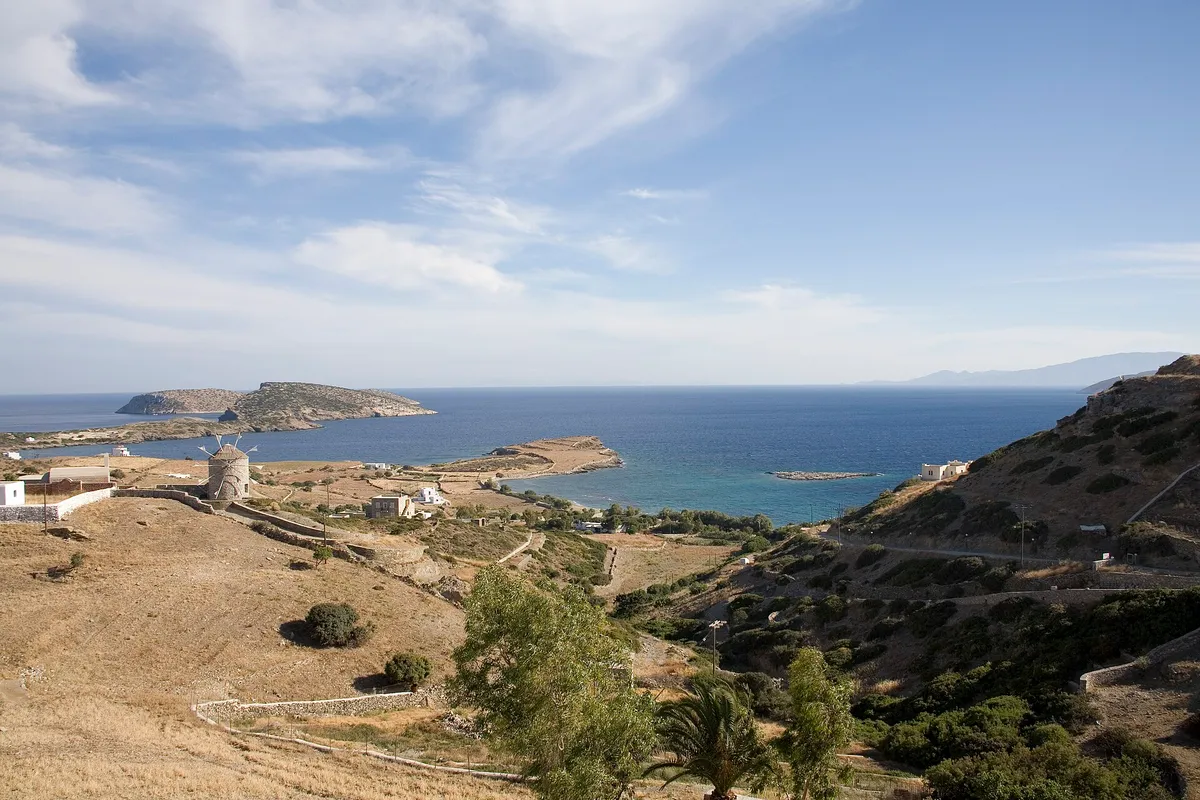
Schinoussa's harbour - one island over from the cave's Iraklia, and the second stop on the sailing day that pairs them. Photo: Wikimedia Commons (CC BY-SA).
Visiting Without a Tour
Can you reach the cave without a Naxos booking? Barely, and worse:
The ferry gets you to the island, not the cave. The Skopelitis line calls at Agios Georgios; from the village there is no boat taxi with a standing cave route - the island's small craft work pre-arranged trips, which in practice means asking at the harbour and paying per-boat prices that erase the shared-ticket economy.
Your own boat - rental or charter - is contract-barred from the run: rental agreements keep self-drive craft in Naxos's west-coast leash, and the strait crossing to Iraklia is exactly the open water the contracts exist to prevent. The rental-vs-tour guide prices that trade honestly.
Private charters reach it happily on custom itineraries - at per-boat rates that make the $33 shared seat look like the bargain of the archipelago.
So the honest answer for the overwhelming majority: the tour boats are not an intermediary in front of the cave - they are the access. Choose by day-shape using the Naxos boat tours comparison, not by whether to go.
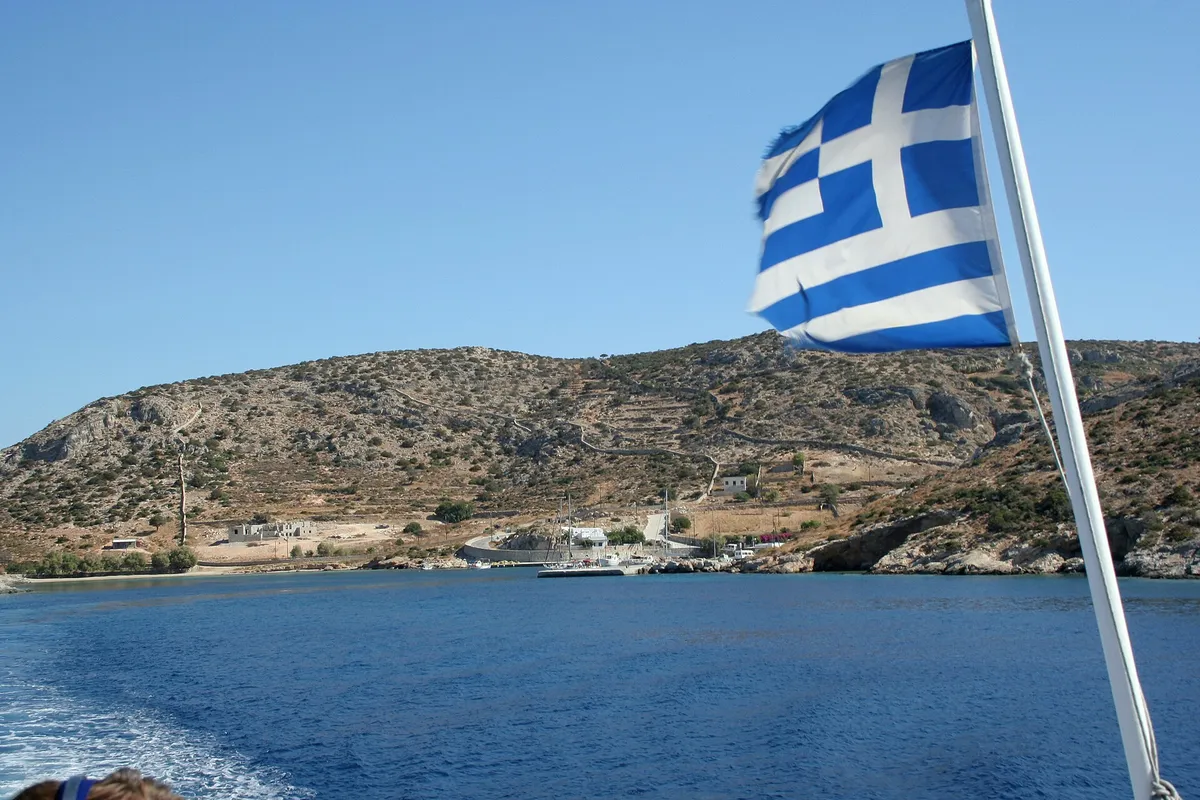
The approach from the water: a Small Cyclades harbour under a Greek flag - the last minutes of the crossing that ends at the cave or the village taverna. Photo: Wikimedia Commons (CC BY-SA).
Photographing the Cave: What the Water Allows
The cave photographs better than it photographs itself - a paradox the reviews keep solving the same ways:
The mouth shot works from the boat: the crew holds position at the lip, swimmers tread the light-line, and the composition writes itself. This is the shot the Panermos crew takes for you and sends free - the only listing in the comparison with a photo service in writing.
The interior float needs a wide angle and steady hands: phone cases flood where big-camera housings fly, and the cave's contrast beats phone HDR. The honest advice in the reviews: float, look, and buy the crew's photos.
The light window: midday sun penetrates deepest - the shaft down the chimney is a late-morning event; afternoons give softer, bluer interiors. Photographers with preferences book the window that matches.
And the ethics line that keeps the cave photographable: no touching the walls (the rock wears under hands), no standing on ledges, no flash at the swimmers below. The cave is a shared room; the pictures should not cost the next boat its view.
The Small Cyclades Context: Where the Cave Sits in the Archipelago
The cave is one face of a chain worth understanding, because the boat routes are really geography lessons:
The Small Cyclades - Koufonisia, Schinoussa, Iraklia, Donousa - arc south-east of Naxos between it and Amorgos. Ferries stitch them weekly; the tour boats treat them as a swimming reserve. The cave sits on Iraklia, the chain's western gate.
Iraklia holds a few hundred people, two villages, the cave, the Alimia wreck and the calmest water in the group. It is the island the boats visit without most passengers realising they have landed in someone's hometown.
Schinoussa is the chain's slow-food island - Mersini's harbour tavernas, Tsigouri's beach, a windmill on the ridge; the sailing day that pairs it with Iraklia uses both.
Koufonisia is the famous twin - the harbour cafe culture and Pori beach that the day-trip guide covers.
The routes make sense once the map does: the boats are not selling stops, they are selling the two hours of open water between islands that have no airports, no bridges and no roads worth the name.
Cave Days That Failed: Reading the Wind Reports
For transparency's sake, the failure mode: the cave's inside swim closes on swell, and the reviews of closed-cave days follow a pattern worth learning from:
The tell is always the same sentence in different words - 'the wind picked up and we couldn't enter the cave, but the crew found a beautiful alternative cove'. The substitution is real and usually lovely; the disappointment is real too, because the cave was the point.
The odds by month: roughly one sailing in ten in June and September, one in five in July-August peak weeks, higher in the specific Force-5+ spells the forecasts name a day ahead. The timing guide maps the meltemi's calendar.
The mitigation: morning slots (the swell builds with the day), the two-hour format (more windows per day, faster re-runs), and the booking pattern that holds an early-week day with room to move.
And the reframe the successful bookers use: the cave is the route's signature, not its whole - the boats that substitute still deliver islands, wine and water. Book the boat you would enjoy even wind-swapped, and the cave becomes a bonus that usually pays.
The Names of the Cave: Rina, Rinia, Rinia's
A practical note for bookers, because the platforms spell it five ways and the search results argue:
On the water, the crews say 'the cave' and the charts label the cove below it; the name is older than the signage. On Naxos's booking platforms, the listings write Rina Cave, Rina's Cave, Rinia Cave and the Cave of Rina - all the same chamber on Iraklia's coast, all reached by the same boats this catalog compares.
The etymology the island offers: local tradition derives the name from the Greek for 'gentle' or from a family name of the island's seafaring past - the honest answer is that the cave is older than anyone's spelling of it.
The booking takeaway: search all the spellings, or simply use the Naxos boat tours price table - every listing that includes the stop is checked under whichever name its platform uses, and the price column is the same language throughout.
And the last disambiguation: there is a Koufonisi cave country too - the archipelago's southern member, Koufonisi, sits near Crete and has its own famous grottoes. The Naxos boats do not go there; the Aegean has two Koufonisia-like names and one of them is a long way south.
The Cave in Local Life: Fishermen, Chapels and the Modern Day
Before the boats found it, the cave already had a working life, and traces of it frame every visit:
The fishermen's harbour below - the cove at the cave's feet shelters Iraklia's small craft in northerlies, and the island's boats have used it exactly as long as Iraklia has had boats. Mooring chains and the odd painted name belong to that trade.
The chapel on the ridge above the coast is one of the Small Cyclades' whitewash constants - the islanders' landmarks are churches before they are caves, and crews point it out as the mark of coming home.
The modern day is the one visitors join: the cave as a scheduled stop, the swimmers' float line, the crews' well-rehearsed choreography. The islanders' view of the fame is practical - the boats buy the tavernas' lunches and the harbour's coffee - and the reviews' most touching thread is passengers describing the crews' pride in the rock.
The visitor's etiquette that keeps the relationship good: take the rubbish that arrived with you, mind the mooring lines when swimming, and greet the working boats as working boats. The cave is a marvel; the harbour is a home.
Questions About Rina's Cave
Where is Rina's Cave?
On the south-western coast of Iraklia, the westernmost island of the Small Cyclades, a short boat-run south of the village of Agios Georgios and open only from the sea. Boats reach it from Naxos in roughly 1.5-2.5 hours from the day-cruise line, or minutes from the Panermos side on the two-hour trip.
Are there any caves in Naxos, Greece?
On Naxos itself, land caves yes - the island's interior hides caverns and the famous grotto churches of the mountain villages - but the famous sea cave on the boat routes is Rina's, on Iraklia's coast. Boats market it from Naxos because Naxos is where the boats leave from.
What is the best boat tour on Naxos for the cave?
For the cave alone: the two-hour Panermos trip, from $33, 5.0-rated with wine and photos included. For the cave plus islands: the Koufonisia full day, from $104. The Naxos boat tours comparison table prices every option that includes the stop.
What is Naxos famous for?
Beaches first - the west coast's unbroken sand belt - then the Portara, the marble doorway of an unfinished temple of Apollo on the harbour islet; the Kouros statues abandoned in their quarries; mountain villages under Mount Zas, the Cyclades' highest peak; and the boat days that run from all of it to the Small Cyclades and their caves.
Is Rina Cave the same as the Koufonisia cave?
There is no Koufonisia cave - the famous sea cave on the Naxos boat routes is Rina's, on the coast of Iraklia, the island next door to Koufonisia. The platforms market it from Naxos because that is where the boats leave; spelling variations (Rina, Rinia, Rina's) all name the same chamber.